When more than 100,000 Tennessee football fans pack Neyland Stadium, the food operation required to feed them is enormous. So is something most fans never see: the used cooking oil left behind after the final orders of fries and chicken leave the fryers.
Last season, Neyland Stadium generated more than 107,000 pounds of used cooking oil, according to Filta Environmental Kitchen Solutions. Rather than being discarded, the oil is collected and sent into the recycling stream, where it can ultimately be used in renewable fuels such as biodiesel.
Behind that operation is Trevor Higgins, president of Filta Environmental – Tennessee, and his local team.
Higgins has worked with Filta for 10 years, growing the Tennessee operation and serving customers and venues across the state, including Neyland Stadium.
“A single game can generate thousands of pounds of used cooking oil,” Higgins said. “Most people never think about what happens to all that oil after the last order of fries or chicken comes out of the fryer.”
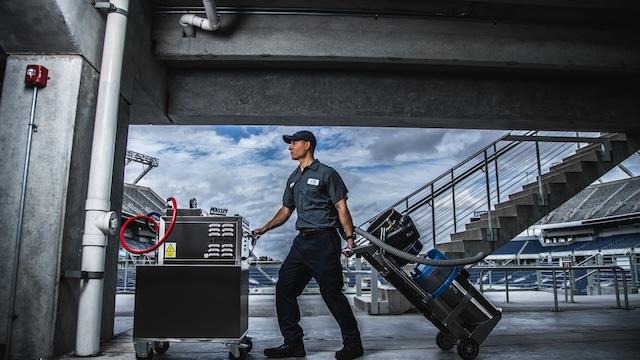
Filta’s work begins after the cooking is finished. The team removes the used oil from stadium kitchens and moves it into the recycling process.
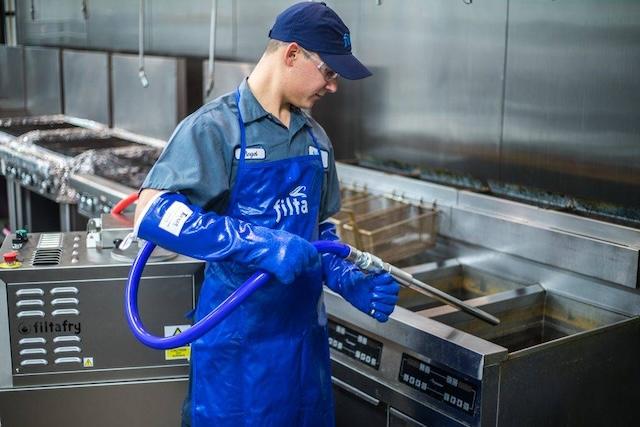
Filta Environmental uses specialized equipment to handle used fryer oil, reducing manual handling and the risks associated with moving hot cooking oil.
That task involves more than simply hauling away grease. Moving thousands of pounds of cooking oil through a stadium presents safety challenges, particularly because fryer oil can cause serious burns and spills can create hazards.
Instead of employees carrying open containers of hot oil, Filta uses specialized equipment and pumping systems designed to contain and transfer the oil while reducing manual handling.
“With the volume we deal with at Neyland, having the right equipment, procedures and trained people is extremely important,” Higgins said.
The work also happens largely out of sight of the fans.
Following games, the Filta crew works to service and collect oil throughout the massive stadium so its kitchens can be reset for the next campus event. According to the company, the operation can involve overnight work on a tight turnaround.
The environmental story begins after the oil leaves Neyland.
Once collected, the used cooking oil is consolidated and transported to processors. Contaminants and impurities are removed, and the recovered oil can then become feedstock for renewable fuel products, including biodiesel.
“So, in simple terms, the cooking oil that helped make food for fans on Saturday can ultimately become part of a renewable fuel supply instead of ending up as waste,” Higgins said.
Filta said its work at Neyland last season also saved more than 5,000 pounds of fresh cooking oil through its filtration process.
For Higgins, one of the most striking parts of working at Neyland is simply the scale.
Fans see concession stands serving food during a football game. Behind those counters is a much larger operation involving preparation before the crowd arrives, service during the game and extensive cleanup afterward.
“Behind the scenes, there is an enormous amount of work happening before, during and especially after the game,” Higgins said.
His team’s challenge is to make an operation involving thousands of pounds of oil spread throughout one of the nation’s largest college football stadiums appear routine.
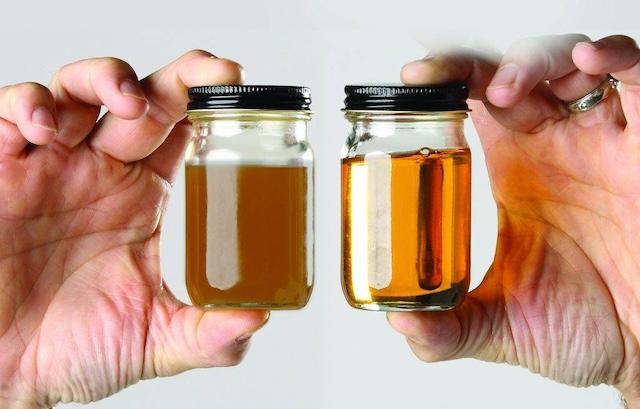
A before-and-after comparison illustrates the results of the cooking-oil filtration process
“It takes planning, good equipment and a crew that knows exactly what they’re doing,” Higgins said. “Most fans will never see our team working overnight, and that’s really the point. We do our job so the kitchens can turn around and be ready to do it all over again.”
So, after the Vols leave the field and the fans head home, another team goes to work — turning a game day byproduct into something that can have another use long after the stadium lights go dark.
Photo credit: Filta Environmental Kitchen Solutions
OUR TOWN. YOUR NEWS.
Stories that connect our community. Read. Respond. Share.
Follow KnoxTNToday on Facebook, Instagram, X, and LinkedIn. Get all KnoxTNToday articles in one place with our free newsletter. Comments may be sent to news@knoxtntoday.com.