As we move toward our nation’s semiquincentennial, I’m focusing on the related contributions and connections of folks of the Fork, the Knox County lands between the French Broad and Holston rivers. I wrote last week about the Campbells and others who gathered at the Pemberton Oak in the days before the Battle of King’s Mountain. Today, we’ll spend some time thinking about their next steps.
After the militiamen crossed the Watauga River to the fort at Sycamore Shoals in September 1780, they met up with others who were there for the same purpose: to respond to British Major Patrick Ferguson’s threat against them.
Charleston had fallen to British forces in mid-May. The Waxhaws massacre just days later demonstrated the ruthlessness of British and Loyalist soldiers and increased the ire of Patriot militiamen in the region. Although “Huck’s Defeat” at the Williamson Plantation in July boosted Patriot hopes, Lord Cornwallis’s victory over American troops at Camden in August caused great concern. The Patriot victory at Muskgrove Mill just three days later, however, demonstrated that the backcountry Loyalists could be defeated. Thus, the men at Sycamore Shoals were motivated. And inspired.
The Rev. Samuel Doak (1749-1830) was a circuit Presbyterian minister who had been a pastor in Abingdon, Virginia, before moving into what is now northeast Tennessee. He was there at Sycamore Shoals to pray over the Overmountain men who were about to march off to face Ferguson and the Loyalists. He told them, “Go forth then in the strength of your manhood to the aid of your brethren, the defense of your liberty and the protection of your homes. And may the God of Justice be with you and give you victory.” He followed that with a prayer that ended, “Help us as good soldiers to wield the sword of the Lord and Gideon. Amen.”
They did gain the victory at the Battle of King’s Mountain, considered by many to be a turning point of the war.
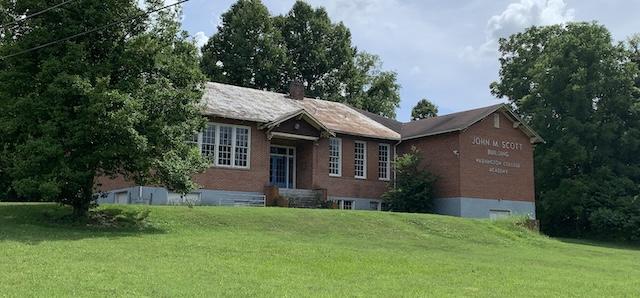
How does Doak connect to the Fork, besides praying over some of the men who later settled here? He started Salem Presbyterian Church and a school that later became Washington College at Limestone there in Washington County, where some of those same men lived, worshipped, and later sent their sons to get an education after moving to the Fork. In fact, two of Doak’s great-granddaughters later married grandsons of men he had prayed over before they fought at King’s Mountain for the independence that was declared in 1776. It’s just a little tidbit of history forgotten in the Fork.
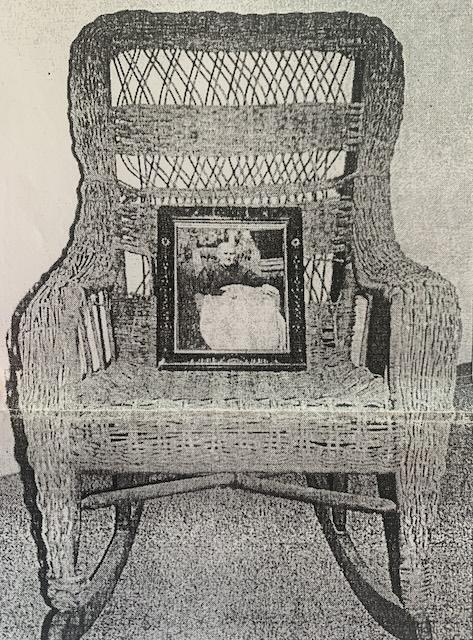
This chair belonging to the Rev. Samuel Doak’s great-granddaughter Sophia Doak Campbell (shown seated in it) is now part of the McClung Collection at the East Tennessee History Center.
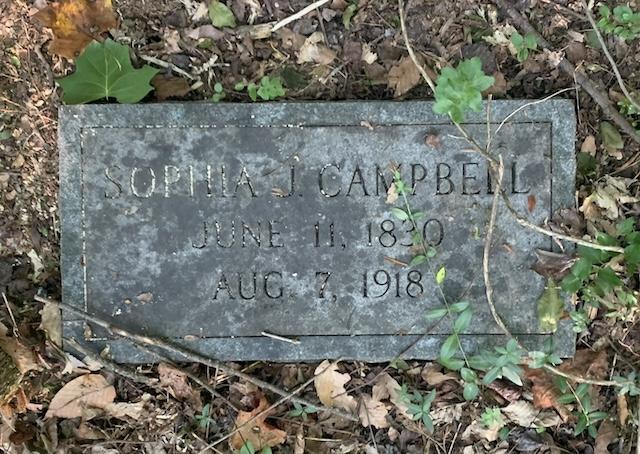
Sophia Jane Doak Campbell and her husband Hugh Goddard Campbell are buried in the Fork.
Jan Loveday Dickens is an educator, historian, and author of Forgotten in the Fork, a book about the Knox County lands between the French Broad and Holston Rivers, obtainable by emailing ForgottenInTheFork@gmail.com.
Follow KnoxTNToday on Facebook and Instagram. Get all KnoxTNToday articles in one place with our Free Newsletter.


Ja nettles..Territory here. I loved this article. Keep sending because l am not on. Facebook, twitter etc. l can barely get an email off these days.
Hi, Terry. Jan’s column runs each Tuesday. One way to monitor KnoxTNToday.com is by setting up an icon on your desktop. Then you just click it on Tuesday (or everyday M-F).
Thank you, Jan, for sharing.
-Thad Osborne
I appreciate knowing someone is reading what I write! Thank you!