

I am sharing the third country visited by the Childers family this week during their European summer adventure: England. Over the last three weeks, I have shared their travels through Italy: A Stop in Rome, the Rest of Italy, and their visit to France.
England, a country rich in history and culture, is part of the United Kingdom and occupies the southern part of the island of Great Britain. Known for its iconic landmarks such as the Tower of London, Buckingham Palace, and Stonehenge, England offers a mix of ancient traditions and modern innovations. Its diverse landscapes range from the rolling hills of the Cotswolds to the rugged coastlines of Cornwall.
England has made major contributions to literature, science, and politics, producing renowned figures like William Shakespeare, Isaac Newton, and Winston Churchill. The nation’s lively cities, including London, Manchester, and Birmingham, are centers of art, commerce, and education, reflecting the energetic spirit of its people.
Here are some of the fascinating explorations from this trip.

The poppies represent every life lost in the two World Wars and other conflicts. Not sure what the crow represents!
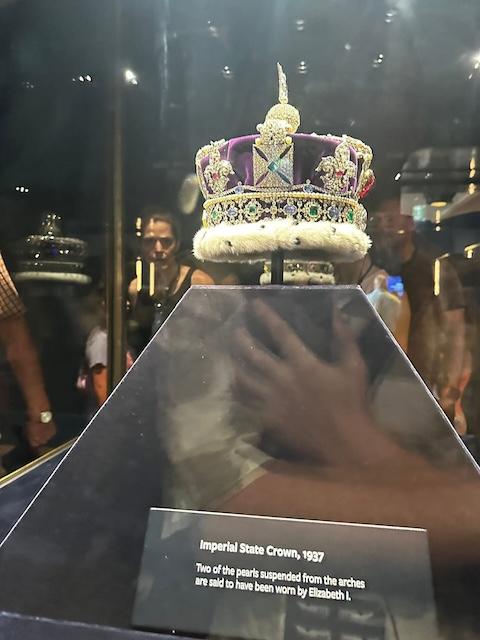
The Imperial Crown is for King Charles, and it is taken out only when he must wear it.

This is where Anne Boleyn and several others were beheaded.

The Shard
The Shard is one of Europe’s tallest skyscrapers at 1,016 feet, including offices, restaurants, a hotel, and an observation deck with stunning city views.

Notting Hill
Notting Hill is famous for its colorful, pastel-hued houses that line its charming streets. Popularized by the film “Notting Hill,” the area features unique architectural designs and is home to the annual Notting Hill Carnival and Portobello Road Market.

Cameron, Maddie and Michael in front of Westminster Abbey
Westminster Abbey is known for its Gothic architecture and rich history. Established in the 10th century, it hosts royal ceremonies, including coronations and weddings. The abbey features tombs and memorials of notable figures, such as monarchs and literary greats.
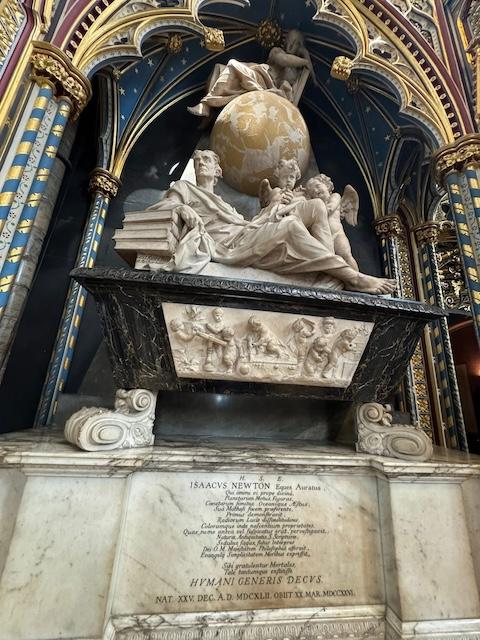
Isaac Newton is buried here
Isaac Newton, born in 1643, was a pivotal figure in science, known for his contributions to physics, mathematics, and astronomy, and served as the president of the Royal Society. Isaac Newton is buried in Westminster Abbey.
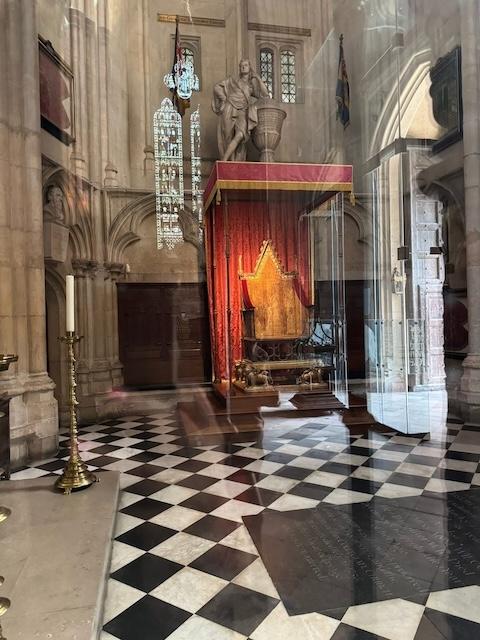
Coronation Chair
The Coronation Chair, also known as St. Edward’s Chair, is located in Westminster Abbey, a symbol of royal tradition.

Mary Queen of Scots is buried here
Mary, Queen of Scots, born in 1542, became queen at just six days old after her father’s death. She returned to Scotland in 1561 after spending much of her early life in France. Her reign was marked by political turmoil. Forced to abdicate in 1567 in favor of her son, James VI, Mary sought refuge in England, where she was imprisoned by her cousin, Queen Elizabeth I, for 19 years before being executed in 1587. She is buried there.
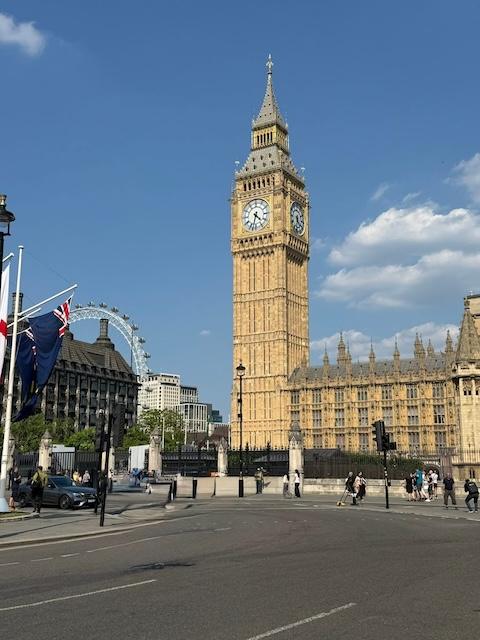
Big Ben
Big Ben is the nickname for the Great Bell of the clock at the north end of the Palace of Westminster in London. Completed in 1859, it is part of the iconic clock tower, now known as the Elizabeth Tower. The tower stands 316 feet tall and chimes every hour.
What a wonderful trip this has been to travel with the Childers family through Europe, and we look forward to more adventures with them!
Knox the Fox loves to share engaging content and your travel adventures, so share yours with knoxthefox24@gmail.com.
Follow KnoxTNToday on Facebook and Instagram. Get all KnoxTNToday articles in one place with our Free Newsletter.

