We continue to move toward our nation’s semiquincentennial, and I’m still sharing about the Revolutionary War effort of attaining independence and the related contributions and connections of families of the Fork, the Knox County lands between the French Broad and Holston rivers.
Last week, I introduced you to Andrew Creswell, a soldier of the Revolutionary War and “Indian Wars,” who moved his family to this region in 1787. Some of Andrew and his wife Dorothy (Evans) Creswell’s descendants ended up in the Fork at what is now part of the East Tennessee State Birding Park. Many of their descending family lines still live in the Fork.
But what did it take to survive so that those latter generations could be born? Not often do we get to see inside the lives of the women who were part of the establishment of our country, but J.G.M. Ramsey preserved a portion of Dorothy’s experience for us. Ramsey personally knew many of the area Revolutionary War veterans, collected their stories, and published his Annals of Tennessee in 1853.
Ramsey tells us that in 1793, just a few years after the Creswells arrived at Boyd’s Creek in what is now Sevier County, William Cunningham was attacked by Native Americans and shot near the Creswell home. He escaped and made it to the Creswell house, where Andrew, his family, and two other men discussed their options. Because a fortified blockhouse (or “station”) was nearby, one man suggested that they make a break for it.
Andrew and Dorothy’s home was built for protection as well. Their only door was thick enough to stop bullets, and their stable was attached to the house in such a way that it was only accessible by lifting a large bolt with a long lever at the head of their bed. Portholes were designed near the stable and on each side of the house so shots could be fired in all directions.
Andrew put the question to his wife. Should they stay put or try to make it to the station? Dorothy responded that death was a threat at either place, and she would rather be at home. “That’s my sort,” replied Creswell, “I will keep this house till the Indians take me out of it.” And so he did.
Though the warriors came and left, the Creswells and their guests all survived, and Cunningham recovered. What if Dorothy had chosen otherwise for them to make a break for the station and they hadn’t survived the run? How many generations of the Fork might have been erased if she hadn’t decided that, given the choice of where she might die, there’s no place like home? It’s just another miracle of ingenuity, grit, and circumstance that helped to lay our nation’s foundation, and it should never be forgotten in the Fork.
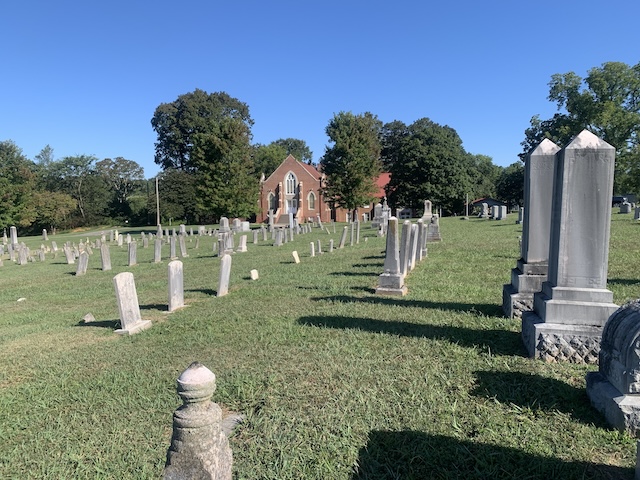
The Presbyterian church they helped to establish in 1786 in Blount County was named Eusebia, which is a Greek word for the biblical concept of spiritual maturity or reverence for God.
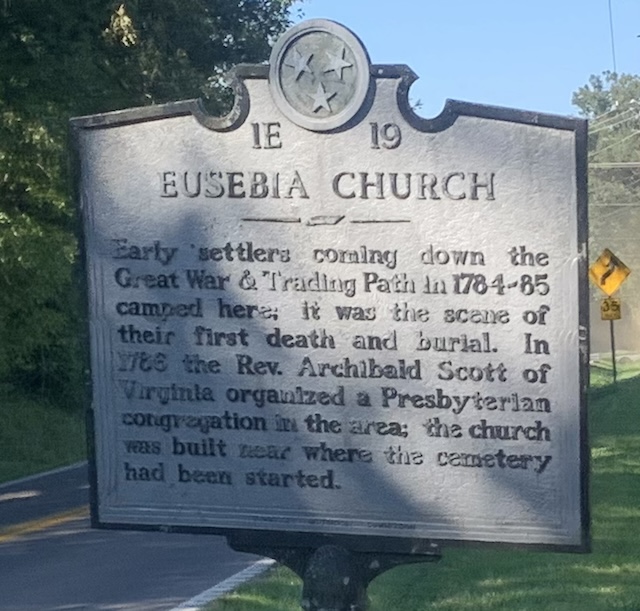
Historical marker for Eusebia Presbyterian Church
Jan Loveday Dickens is an educator, historian, and author of Forgotten in the Fork, a book about the Knox County lands between the French Broad and Holston Rivers, obtainable by emailing ForgottenInTheFork@gmail.com.
Follow KnoxTNToday on Facebook and Instagram. Get all KnoxTNToday articles in one place with our Free Newsletter.


Thank you, Buddy! I deeply appreciate your interest and your taking time to comment encouraging words.
These articles about East TN are fascinating and very well written. Thanks for providing them.